
The Mother's House and the Prince's Duty
I ChingThis flow traces the recurring family images in Decay and Restoration as a drama of filial duty, difficult correction, and neglected responsibility.
increasing Bearing strength in each event
 decreasing
Bearing strength in each eventdecreasingA Household Inherits Trouble
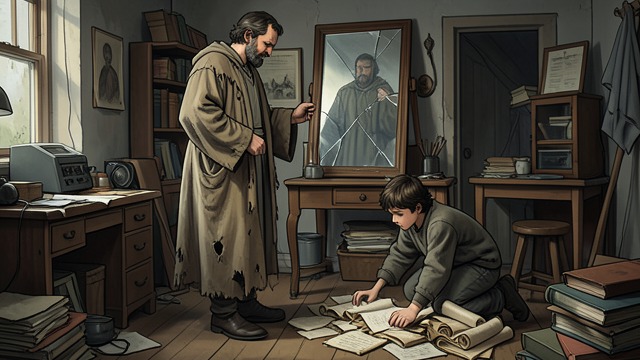
Trouble Passed Down
Decay needs attention
The hexagram describes a condition in which disorder has accumulated, likened by Legge to things ruined through neglect or corruption. Restoration requires deliberate effort.
Its opening judgment calls for examining what happened before and what must follow the turning point.
A family metaphor
Several lines depict a son dealing with trouble caused by a father or mother. Legge warns that the family roles do not always map neatly onto the line structure.
The images make inherited problems personal without offering a simple account of blame.
A Son Corrects His Father's Course
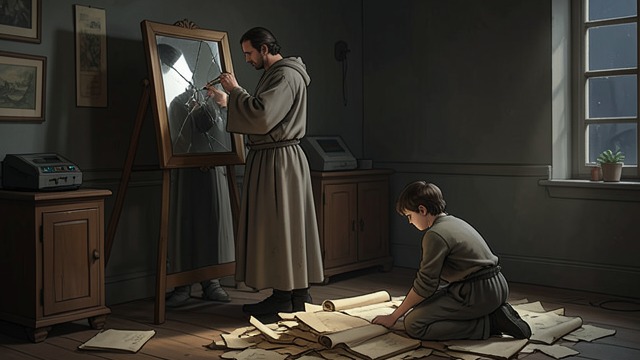
Repair Before Failure Deepens
A difficult obligation
The first line presents a son dealing with troubles caused by his father. Legge says that an able son can prevent the father from being remembered as having erred.
Correction is hazardous but may end well.
Duty with restraint
The son is not invited to erase the past or humiliate the parent. His work is to restore what has been damaged while keeping the relationship intact.
The line makes filial duty active rather than merely obedient.
A Son Must Temper His Opposition
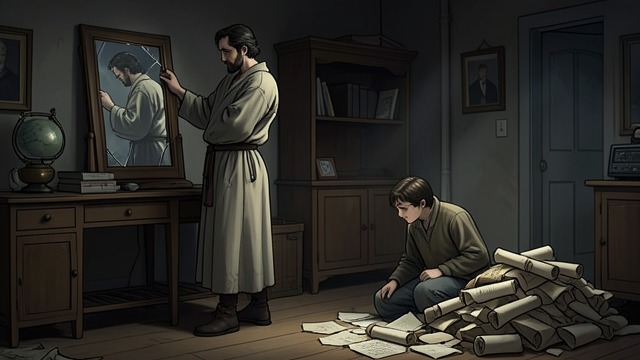
Correction Within a Bond
A mother's trouble
The second line describes a son dealing with troubles caused by his mother. Legge reads the situation as requiring special gentleness.
Firmness must not become inflexible severity when the relationship demands care.
A limit on rectitude
The line warns against carrying firmness to its utmost. The son's purpose may be right, yet the means must be adapted to the person and relationship involved.
The family drama makes moral action dependent on both principle and tenderness.
Indulgence Allows Decay to Continue
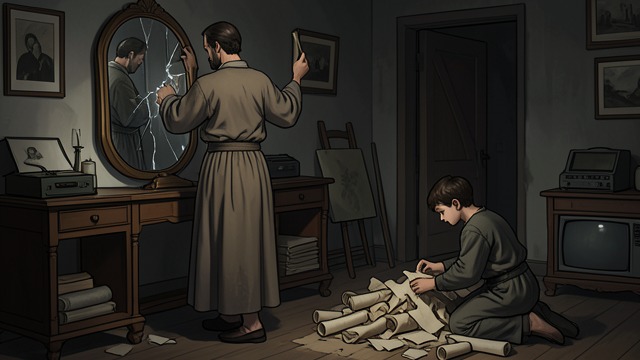
A Failure to Intervene
Leniency becomes complicity
The fourth line shows a son viewing his father's troubles indulgently. Legge says that moving forward in this way will bring regret.
Inaction may preserve comfort while allowing damage to continue.
A hard distinction
The text contrasts appropriate gentleness with failure to correct. Family loyalty cannot mean overlooking every harmful course.
The line sharpens the drama: responsibility sometimes requires a difficult intervention.
Restoration Earns Praise
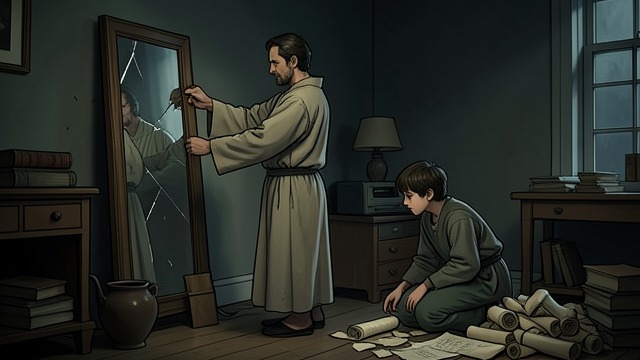
Repair and Independence
Work recognized
The fifth line praises a son who uses the proper means to address the trouble. Legge reads it as successful restoration rather than mere criticism of the parent.
Skill and judgment make correction effective.
A life outside public service
The final line moves away from family repair toward a person who declines service to rulers. Legge interprets this as a withdrawal into personal cultivation.
The sequence leaves room both for responsible intervention and for refusing a public sphere that no longer offers a proper task.
At the opening of Decay and Restoration
At the first line of Decay and Restoration
At the second line of Decay and Restoration
At the fourth line of Decay and Restoration
At the fifth and sixth lines of Decay and Restoration
